Shades of grey, white and black
People are different, even when they live in one and the same country. There is no "black and white", but rather countless shades of grey, white and black – travelling with Servas opens a door to these colours.
For a long time beforehand, we asked ourselves whether we could embark on our planned trip to Israel given the current unstable political situation in the Middle East. We wanted to spend half of the three and a half weeks with old and new Servas friends, and the other half partly in a hotel in Jerusalem that is very popular with pilgrims, and partly in a small hotel in Eilat (because when you travel with Servas, you need a little "time to yourselves" every now and then).
Friends and family were very sceptical about the trip – deeply anchored, then as now, were the black-and-white images of rioting settlers in the West Bank, of Palestinians who sacrifice their own lives to the fight against Israel, of Orthodox Jews whose appearance gives the impression of having "fallen out of time", and of soldiers whose machine guns shape the street scene. These images have been and continue to be reinforced and shaped by media coverage. Many Germans have an opinion about the State of Israel and believe they know a solution for this divided country – even though many of them have never even been there. Travelling with Servas offers the chance to gain an insight into the lives of the people who live there and to empathise with their worries about the future of their country.
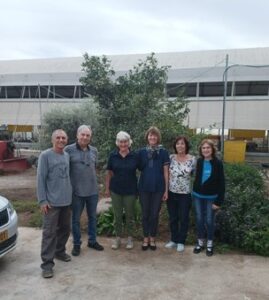
We already knew Ruben & Ruth from Haifa from their stay with us in 2024, and after celebrating Kiddush with them in Neuss, we wanted to repeat it in Haifa. When we saw each other again on our first day, it was as if we had celebrated Kiddush together only a week before – with challah and wine, the prayers and good food. Walking through Haifa at night allowed us to arrive gently in this country. Experiencing the commitment of volunteers at a supply centre for soldiers was just as surprising and moving for us as being with the people at a senior citizens' centre, who already recognised us on the second day and greeted us most warmly. And over many shared meals we talked about everything we observed and perceived; the upcoming parliamentary elections were very present in these conversations – the hoping for better times. And we listened to Ruben in astonishment: "I am a reservist; I always carry my weapon with me." Even in retirement you remain a reservist in Israel – something we had never thought about before.
In Kibbutz Geshur, Tzuki & Dalit let us share in their lives, shaped by their tireless commitment to sustainable living – we only have this one Earth. For many people, olive trees are the basis of their livelihood. In Geshur we experienced a tour by an enthusiastic member of staff through the olive press, where the olives harvested by machine just beforehand were being processed – the olive harvest had begun that very day. In Jerusalem we were later able to harvest olives ourselves on the grounds of the Augusta Victoria Hospital – quite exhausting, we found, but it brought a small gain for the Thalita Kumi school in Bethlehem, where children are taught regardless of their religion. The chance visit to the Tante Berta jam factory near Kibbutz Geshur, run by a German Zionist Christian, gave us the opportunity to see a fully automated factory, complying with all the requirements of the Kashrut certificate. Living kosher shapes the lives of many Israelis, often interpreted individually, sometimes following all the rules more, sometimes less. That the people of Israel remain deeply connected to our German history was something we experienced in the evening at Dalit's choir rehearsal in a religious kibbutz, when we were asked afterwards by a woman whether we might know a German children's song – her grandmother had described it in her diary in 1918/19. Her grandmother had had to flee from the Nazis, and this woman had translated the diary. We belong to a different generation, and yet we are part of our German history and always will be.
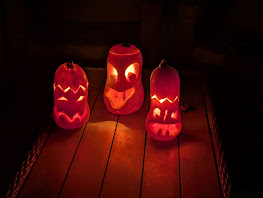
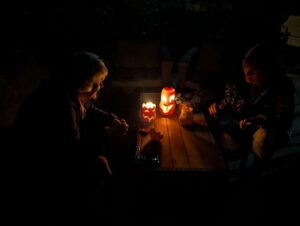
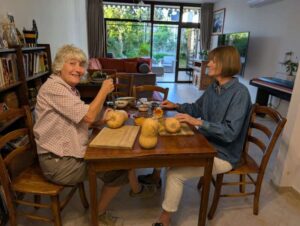
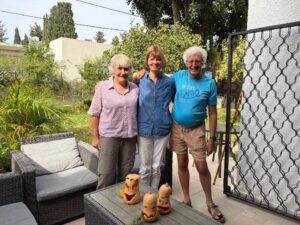
With David from the vicinity of Be'er Sheva we shared, besides a love of the Dutch language – he too had read a book by the recently deceased Pauline Cornelissen – a curiosity about this country's history, the making of Halloween pumpkins and the mastering of biographical challenges that sometimes roll over you and that you simply have to face if, looking back on your life, you want to say: "It was a good life." His openness about our professional biography opened up contact with an Israeli professor, with whom a joint research project for mothers might perhaps be realised – mothers who try to do justice to their role in such a way that their children can start their lives well.
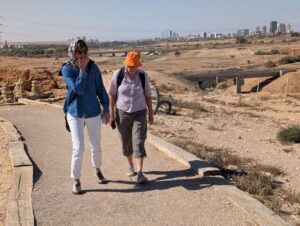
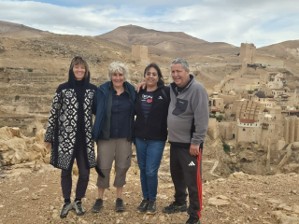
"We invite you to share in our lives" was not just something Hagar & Ziv from Hadera said in passing – they meant it literally. Enjoying shakshuka for breakfast in the desert, in pouring rain, under an umbrella, with a view of St George's Monastery (Wadi Qelt) was just as delightful as drinking the coffee brewed on the little gas stove at sunset by the Dead Sea – where, of course, we had gone for a swim beforehand. And what do you answer to the statement that you cannot drive to Jericho, even though it lies only a stone's throw from our route? – You are Israeli. We are two Germans and, during our visit to Bethlehem, met wonderful people with an unbridled longing for peace. And what do you answer to the words of Hagar's daughter, who hopes that she will not have to cancel her wedding planned for the end of November because of a new war, when you yourself know that you will be celebrating your own daughter's wedding in Cologne just a few days earlier? These thoughts went through my head in the car on the three-hour drive back from the Dead Sea to Hadera, and how emotionally connected we felt once more as we confidently sang along, the four of us, to the songs of Elvis, ABBA and Queen. We knew them all from our youth. Our youth, which in one country ended with entering the Israeli army, and in the other with starting an apprenticeship in Germany.
"We invite you to share in our lives." We did just that and are returning richly gifted, because what unites us despite all our differences is the wish for peace and a safe future for our children and grandchildren.